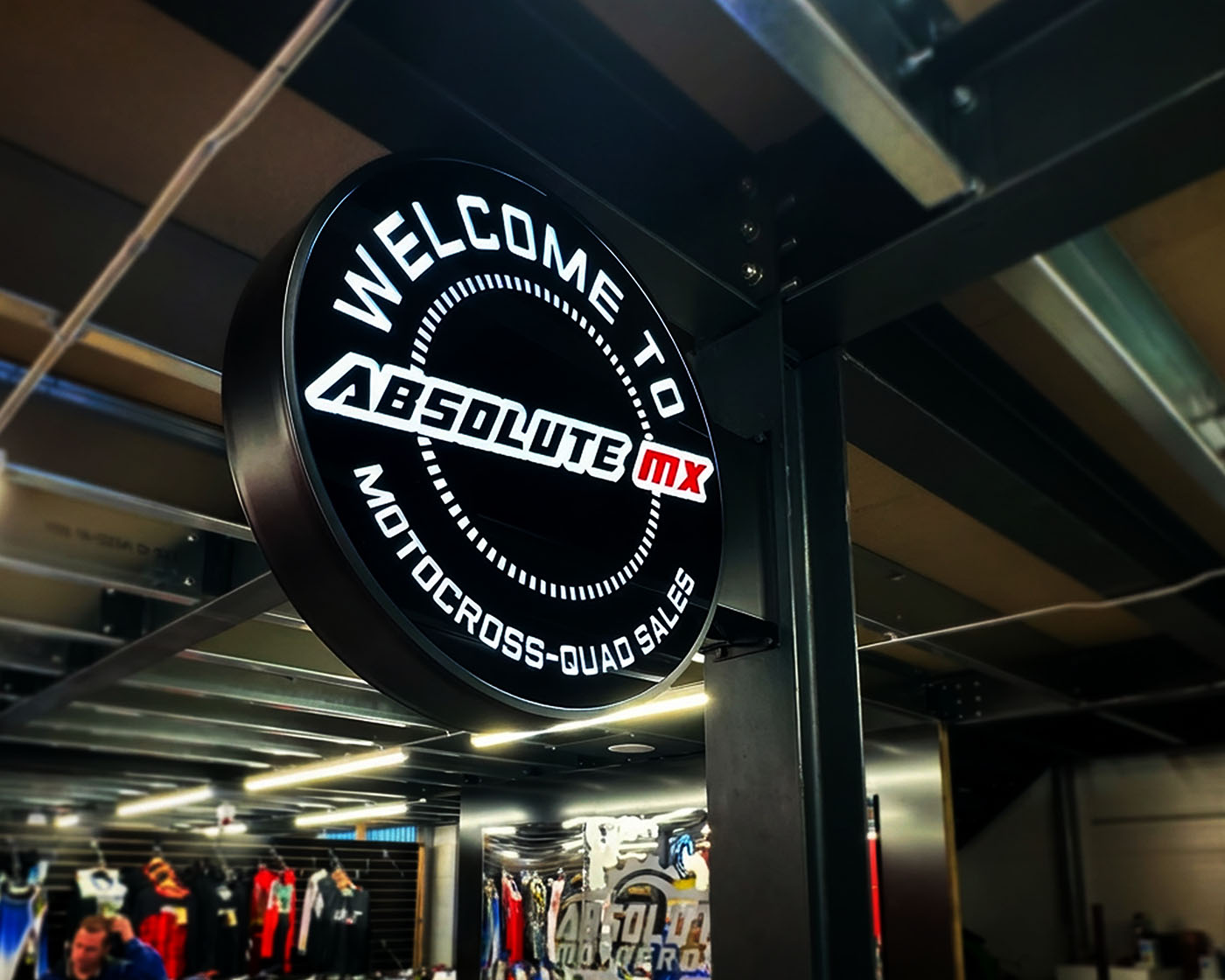
About Projecting Signs
Projecting signs extend out from a building facade, typically mounted perpendicular to the wall so they can be seen from both directions along a street or walkway. They are often used for shopfronts, businesses, venues and entrances where visibility from passing foot traffic is critical.
Projecting signage sits within the wider category of Exterior Signage and is frequently combined with Shopfront Signs to create a clear and recognisable presence from multiple viewing angles.
Compare Projecting Signs
Projecting signs are designed for visibility along movement routes, whereas fascia or flat signs are intended to be read head-on. In many cases, the two are used together to ensure a business is visible both directly and in approach.
If illumination is required for evening or low-light visibility, Illuminated Signage may be appropriate. Where lighting is not needed, projecting signs can also sit comfortably within a Non-Illuminated Signage scheme.
Why Businesses Choose Projecting Signs
Flat signage can be difficult to spot on busy streets, especially when viewed side-on. Projecting signs solve this by placing information directly into the line of sight of pedestrians approaching from either direction.
They are particularly effective in retail streets, historic town centres and shared frontages where space is limited and competition for attention is high. A well-designed projecting sign improves discoverability without relying on large-scale signage.
How JD3 Delivers Projecting Signs
JD3 starts by assessing viewing distances, pedestrian flow and local surroundings to determine the appropriate size, projection depth and mounting position. We then define clear layouts that remain legible at a glance without excessive detail.
Materials and finishes are specified to suit exposure, planning constraints and durability requirements. Signs are manufactured and installed with secure fixings and accurate alignment to ensure safety, longevity and consistent visibility.
Projecting Signs
Projecting signs are designed to be seen from a distance and at an angle, making them ideal for busy streets and pedestrian routes. JD3 designs, manufactures and installs projecting signage that improves visibility without overwhelming the building it’s fixed to.
They are commonly used where signage needs to stand out along a frontage rather than sit flat against it.